10,3461
Tests
the collected checks that pin this engine's behavior
ENGINE 19
SFS-E19-EXP · EXPENSE CONTROLS · REV 2026-07-24 · PRODUCTION
PRODUCTION = runnable end-to-end, CI-backed, full test suite passing. All data fictional and seeded.
Every charge, a receipt
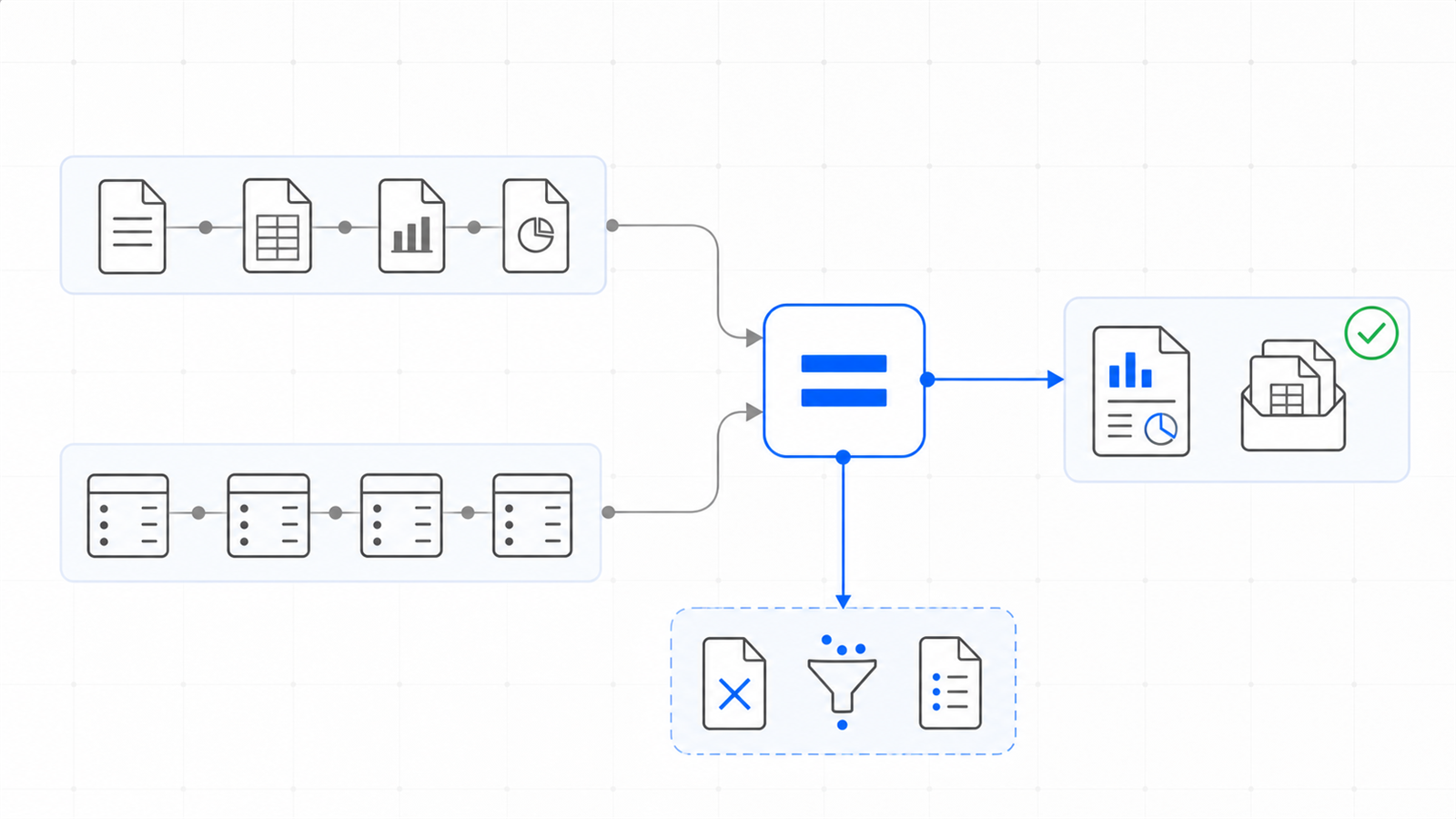
A company does not reimburse a card statement on trust. It issues a purchasing card, the bank issues a statement, and the cardholder owes a matching expense report: one line per charge, each with a receipt on file, a business purpose, a valid general-ledger code and a real project, filed inside the submission window, under the per-charge limit, and approved by somebody other than the person who incurred it. This engine reads the six artifacts a statement cycle emits -- the cardholder register, the programme policy, the project register, the bank statements, the expense reports and the general-ledger positions -- and runs twenty-three deterministic controls over them. Does every charge on the statement reconcile to exactly one report line to the cent, does that line carry a receipt and a stated purpose, is it coded to a GL account the policy allows and a project that exists, is the charge under the limit and inside the window, and did a second person approve it. It re-derives the reconciliation from the statement rather than trusting the report's footed total, compares every amount as integer cents with exact equality, and never writes to a source artifact.
The failures here do not look wrong in a page of small numbers, which is exactly why a footed, receipted report carries them straight through. A charge with no report line does not fail a total -- the report total is simply lower than the bank's -- so it survives to whoever reconciles the statement line by line, if anyone does; it is a company expense nobody coded and nobody has a receipt for. A report can foot to a tidy round number and still be a penny off the statement it is meant to mirror, because summing to a clean total is not the same as tying to the bank. And the charge that should never have been on the card -- one cent over the limit, a bar tab in a disallowed category, a project code that does not exist, a report the cardholder signed off themselves -- walks past every check that only looks at whether the numbers add up. Footing is necessary and not sufficient. The engine re-derives the reconciliation where the penny actually lands, ships a planted-defect file for every registered control, and states its benchmark as a command rather than a claim.
Eight control families run in registry order over each cycle file. The first proves the others had something to read and that the review date is legible, because a control that passes on absent evidence reports assurance it never performed.
A company issues a purchasing card, the bank issues a statement, and the cardholder owes a matching expense report -- one line per charge, each with a receipt on file, a business purpose, a valid general-ledger code and a real project, filed inside the submission window, under the per-charge limit, and approved by somebody other than the person who incurred it. Several failures hide inside that, and none of them look wrong in a page of small numbers. A statement line with no report line is a company expense nobody coded and nobody has a receipt for; it does not fail a total -- the report total is simply lower than the bank's -- so it surfaces only when the report is reconciled line by line against the statement. A report can foot to a tidy round number and still be a penny off the statement it is meant to mirror, because summing to a clean total is not the same as tying to the bank. And a charge that should never have been on the card -- one cent over the limit, in a disallowed merchant category, coded to a project that does not exist, or approved by the cardholder themselves -- is a control break a footed, receipted report will still carry straight through. None of these are judgment calls. They are equalities -- a charge against its report line, a report against the statement, an approver against the cardholder -- which a deterministic control settles better than a page of small numbers that already adds up.
The seeded demo runs every control over every cycle file7. The CLI generates 24 fictional cycle files -- one clean baseline and one carrying each of the 23 planted defects -- then runs all 23 controls over each. The clean file returns PASS with no flags; every defect file returns REVIEW or FAIL and names the control it tripped along with the reason that control exists.
A cent on the wrong line still fails, a footed total does not save it8. A test moves one cent onto a report line so it no longer matches its statement charge. rec_every_charge_reported fires at exactly one cent either side of the amount, proving the reconciliation ties to the cent and that summing to a round number is necessary but not sufficient.
The per-charge limit is a hard edge, measured to the cent9. A test sets a charge one cent under, exactly at, and one cent over the per-charge limit. pol_per_charge_limit stays silent at and under the limit and FAILs one cent over -- a control break whether or not the expense itself was legitimate, and a boundary a footed report walks straight past.
| Command | Operation | Output | Exit | Artifacts |
|---|---|---|---|---|
python run.py | regenerate the seeded fictional corpus, run all twenty-three controls, write both reports | per-file verdicts and every actionable finding, then the overall verdict | 2 for the bundled corpus, which carries a planted defect for every control by design | expense_report.json, expense_report.md, samples/ |
python -m expense_engine samples | analyze an existing folder of cycle files without regenerating it | per-file verdicts and findings | 0 PASS / 1 REVIEW / 2 FAIL / 3 usage | none unless --json or --md is passed |
python -m expense_engine samples --generate --quiet | regenerate the corpus and print only the overall verdict | a single verdict line | 0 PASS / 1 REVIEW / 2 FAIL / 3 usage | samples/ |
python -m pytest | run the full test suite for this engine | 10346 passed | 0 when every test passes | none |
| Measure | Result |
|---|---|
| Engine tests10 | 10,346 tests collected live collection from the engine directory |
| Registered controls11 | 23 controls counted from the registry, not from documentation |
| Planted defects12 | 23 defect files every registered control has a file that trips it |
| Control coverage13 | 100 percent of controls with a planted defect no control ships without a file demonstrating it firing |
The engine has no write path and therefore no autonomy to gate. It produces findings; a person decides whether a charge is reimbursed and posted.
Deterministic envelope. seeded fictional inputs, read-only operation, offline default mode.
Demo gate. FAIL on the bundled corpus, by design -- it carries a planted defect for every registered control
| Severity | Verdict | Action |
|---|---|---|
| No findings above PASS | PASS | carry the mechanically clean cycle into the documented reimbursement and posting review |
| One or more FLAG, no FAIL | REVIEW | a human resolves each flag; a charge in a disallowed category and a report filed after the submission window both land here |
| One or more FAIL | FAIL | the cycle does not go to reimbursement or posting until the failing control is cleared |
Distribution: public repository, MIT license.
One conversation: you describe the work that consumes your team's month; we tell you plainly what this engine can take over, what it can't, and what a scoped first phase would cost. Your people keep approval authority.
Book a free consultation