10,3691
Tests
the collected checks that pin this engine's behavior
ENGINE 25
SFS-E25-DUE · FILING COMPLIANCE · REV 2026-07-24 · PRODUCTION
PRODUCTION = runnable end-to-end, CI-backed, full test suite passing. All data fictional and seeded.
Was every deadline met or validly deferred?
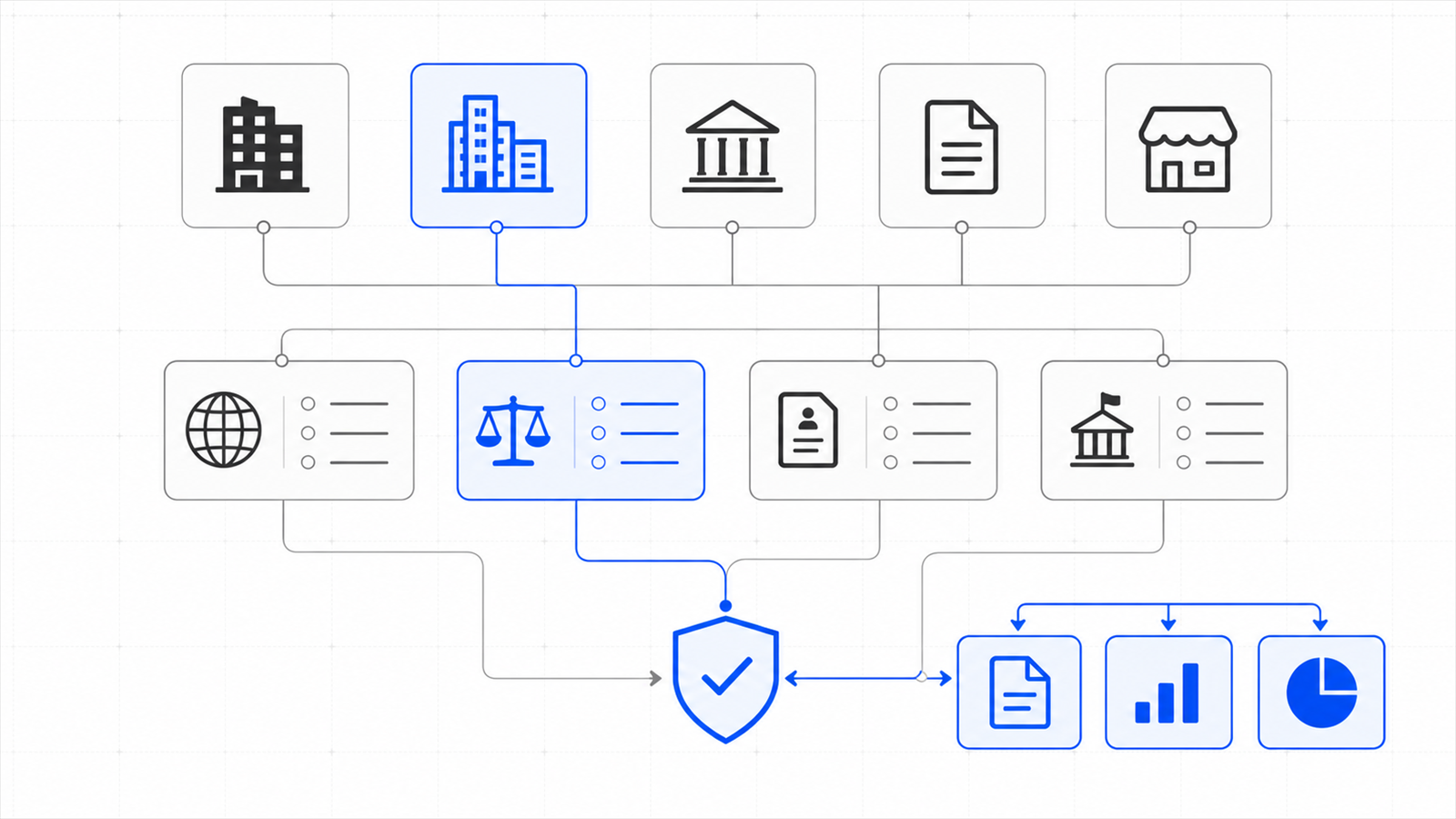
A group of entities carries a filing obligation in every jurisdiction it touches -- a federal return, a state return, a fixed-amount annual voucher -- and someone has to prove, entity by entity and obligation by obligation, that each one was filed or validly extended before its statutory deadline, that each fixed-amount payment went out in the exact amount the statute prints on the voucher, and that the status register ties to the filed evidence with nothing missing and nothing orphaned. A filing calendar is a grid of dates that was correct the day someone typed it, and it drifts in ways nobody watches until a notice arrives. This engine reads the seven artifacts the calendar carries -- the entity roster, the statutory due-dates table, the obligation register, the evidence index, the prior-year register, the status summary and the due-soon watchlist -- and runs twenty-two deterministic controls over them. Is the calendar file complete and the review date legible, does every obligation carry a readable year-end that maps to the statutory table and store an original and extended due date that re-derive from it, do the extension flag and the extended date agree, is anything past its applicable deadline unfiled or filed after it, is each fixed-amount payment the exact statutory constant, does every filed row tie to a voucher and every voucher back to a row, is the roster complete and every obligation attributable and uniquely identified, does the internal workflow schedule run in order, does an entity marked final in the prior year stay dissolved, and does the status roll-up recompute from the register it summarises rather than being read back as an assertion. It re-derives every due date from the form and the year-end with whole-month arithmetic, treats a deadline as met at the date and not a day past it, and never writes to a source artifact.
This is the calendar half of the tax story, the half that is not about what the return says or what the tax is: preparing the return and computing the tax are separate jobs, and this engine takes the finished calendar and proves only that every obligation was met or validly deferred on time. None of the failures here look wrong in a grid of dates. A due date is typed a day off, or an extension offset is keyed to the wrong form, and the whole register chases a deadline that is not the statutory one. An obligation is neither filed nor extended, its deadline slides past the review date, and it sits in the register looking like every other open row until it is a late-filing penalty. A row is marked filed with a receipt number but no voucher was ever archived, or a voucher sits in the archive with no row that claims it, and the count of done no longer means what it says. The annual LLC tax is a statutory constant, and a voucher cut a cent off it is wrong on its face. And the status summary calls an obligation filed, or a portfolio clean, on a determination nobody recomputed from the register beneath it. The engine re-derives every deadline from the form and the year-end, rebuilds every status from the obligation's own dates, ties each filed row to its evidence and each piece of evidence to a row, ships a planted-defect file for every registered control, and states its benchmark as a command rather than a claim. A deadline missed, or a voucher cut short, is invisible until the notice arrives.
Nine control families run in registry order over each calendar file. The first proves the others had something to read and that the review date is legible, because a control that passes on absent evidence reports assurance it never performed.
A group of entities carries a filing obligation in every jurisdiction it touches, and someone has to prove, entity by entity and obligation by obligation, that each return or payment was filed or validly extended before its statutory deadline, that each fixed-amount voucher went out in the exact amount the statute prints, and that the status register ties to the filed evidence with nothing missing and nothing orphaned. A filing calendar is a matrix of dates that was correct the day someone typed it, and four failures hide inside that, none of which look wrong in a grid of dates. A due date is typed a day off, or an extension offset is keyed to the wrong form, and the whole register chases a deadline that is not the statutory one. An obligation is neither filed nor extended, its deadline slides past the review date, and it sits in the register looking like every other open row until it is a late-filing penalty; a return lodged a day after its applicable due date is late in exactly the same invisible way. A row is marked filed with a receipt number but no voucher was archived, or a voucher sits in the archive with no row that claims it, and the count of done no longer means what it says. The annual LLC tax is a statutory constant, and a voucher cut a cent off it is wrong on its face. None of these are judgment calls. They are equalities and comparisons -- a re-derived deadline against a stored one, a filed date against an applicable deadline with exact <=, a stated amount against the statutory constant, a stated status against its re-derivation -- which a deterministic control settles better than a spreadsheet inherited by whoever tracks filings this year. This is the calendar half of the tax story; preparing the return and computing the tax are separate jobs, and this engine takes the finished calendar and checks only that every deadline was met or validly deferred on time.
The seeded demo runs every control over every calendar file7. The CLI generates twenty-four fictional calendar files -- one clean baseline and one carrying each of the twenty-three planted defects -- then runs all twenty-two controls over each. The clean file returns PASS with no flags; every defect file returns REVIEW or FAIL and names the control it tripped along with the reason that control exists.
A deadline is met at the date, not a day past it8. A boundary test files a return one day before, exactly on, and one day after its applicable deadline. ext_filed_on_time fires only on the day-after case and stays silent at the deadline and before, because the comparison is exact <= -- a return filed on the applicable due date is on time and a day past it is late, and ext_applicable_overdue uses the same edge for an unfiled obligation whose deadline lands on the review date. There is no grace band.
The status is recomputed, not read back9. A test flips an obligation's stated status to contradict its register dates. rpt_status_recomputes rebuilds the status -- filed, filed-late, overdue, open or not-applicable -- from the obligation's own original and extended due dates and filed date, and fails because the stated determination no longer matches the register, proving the roll-up is recomputed rather than trusted.
| Command | Operation | Output | Exit | Artifacts |
|---|---|---|---|---|
python run.py | regenerate the seeded fictional corpus, run all twenty-two controls, write both reports | per-file verdicts and every actionable finding, then the overall verdict | 2 for the bundled corpus, which carries a planted defect for every control by design | filing_report.json, filing_report.md, samples/ |
python -m filing_engine samples | analyze an existing folder of calendar files without regenerating it | per-file verdicts and findings | 0 PASS / 1 REVIEW / 2 FAIL / 3 usage | none unless --json or --md is passed |
python -m filing_engine samples --generate --quiet | regenerate the corpus and print only the overall verdict | a single verdict line | 0 PASS / 1 REVIEW / 2 FAIL / 3 usage | samples/ |
python -m pytest | run the full test suite for this engine | 10369 passed | 0 when every test passes | none |
| Measure | Result |
|---|---|
| Engine tests10 | 10,369 tests collected live collection from the engine directory |
| Registered controls11 | 22 controls counted from the registry, not from documentation |
| Planted defects12 | 23 defect files every registered control has at least one file that trips it |
| Control coverage13 | 100 percent of controls with a planted defect no control ships without a file demonstrating it firing |
The engine has no write path and therefore no autonomy to gate. It produces findings; a person decides whether an obligation is treated as met and whether a filing is chased.
Deterministic envelope. seeded fictional inputs, read-only operation, offline default mode.
Demo gate. FAIL on the bundled corpus, by design -- it carries a planted defect for every registered control
| Severity | Verdict | Action |
|---|---|---|
| No findings above PASS | PASS | carry the mechanically clean calendar into the documented sign-off and the next filing cycle |
| One or more FLAG, no FAIL | REVIEW | a human resolves each flag; an unfiled obligation inside the lead window, a slipped internal workflow step and a watchlist that does not tie the register all land here |
| One or more FAIL | FAIL | the obligation is not treated as met until the failing control is cleared -- a due date that does not re-derive, an overdue or late filing, a fixed amount off the constant, an evidence gap, a roster gap, a recurring final entity, or a roll-up that does not recompute |
Distribution: public repository, MIT license.
One conversation: you describe the work that consumes your team's month; we tell you plainly what this engine can take over, what it can't, and what a scoped first phase would cost. Your people keep approval authority.
Book a free consultation