10,3811
Tests
the collected checks that pin this engine's behavior
ENGINE 23
SFS-E23-QPR · PROFORMA INTEGRITY · REV 2026-07-24 · PRODUCTION
PRODUCTION = runnable end-to-end, CI-backed, full test suite passing. All data fictional and seeded.
Does the workbook still tie to itself?
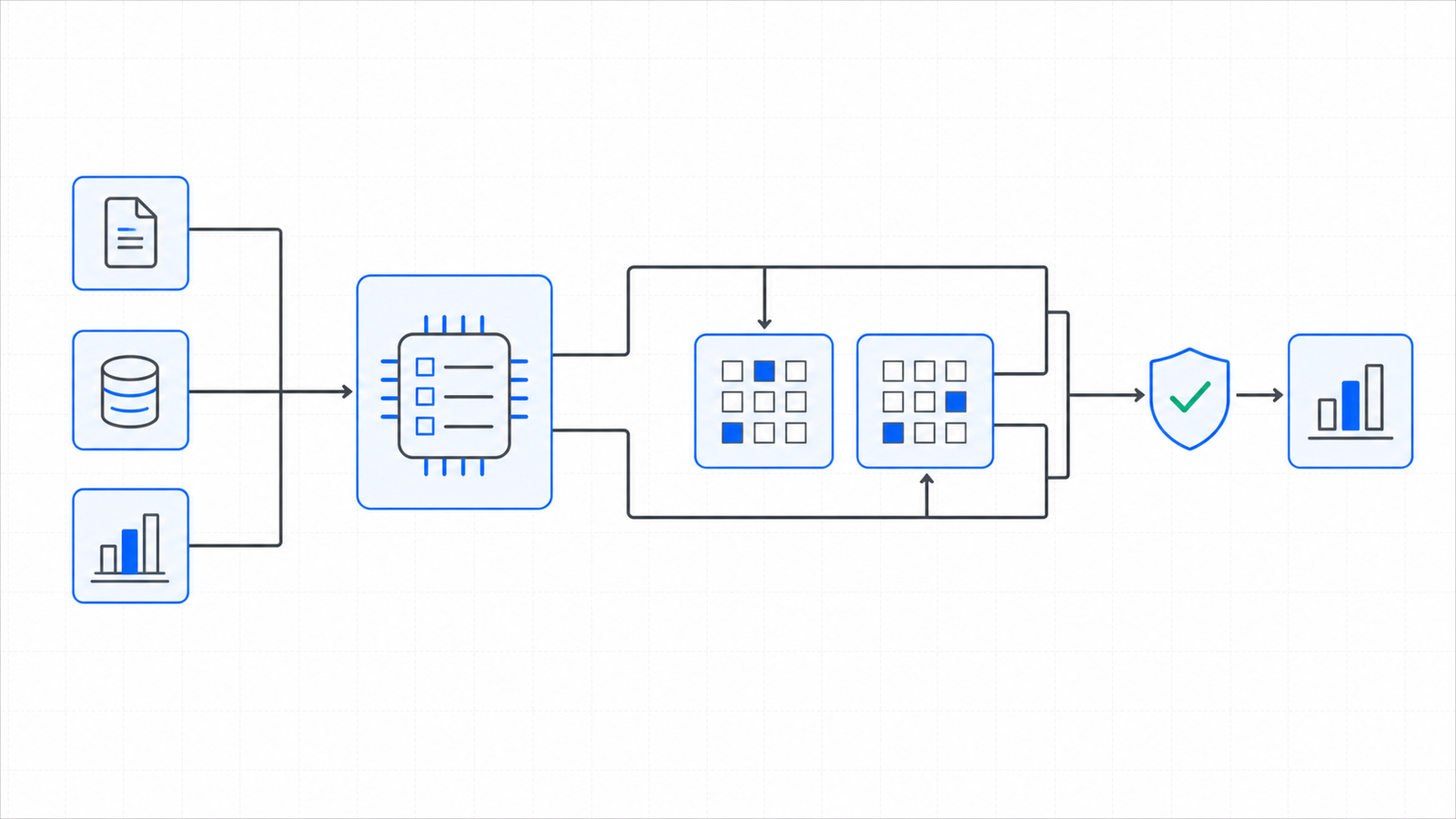
A real-estate developer reports every active project each quarter with a proforma workbook -- a grid of formatted numbers that was internally consistent the day a formula last recalculated, and that drifts the moment a cell is overtyped or a tab is rolled forward without its precedents. The error-check tab keeps showing zeros because the zeros themselves were typed. This engine reads the six artifacts a reporting cycle emits -- the project register, the per-project base ledger, the stated tie-out summary, the reporting calendar, the filing register and the cycle report -- and runs twenty-six deterministic controls over them. Do the sources and uses total and balance, does hard plus soft equal total project cost and the dev-cost budget equal the unlevered cost, is the interest reserve adequate and the equity funded before construction, does net profit re-derive from revenue and cost, does the owner-repayment waterfall tie to net profit and do the sponsor and investor splits sum to the whole, do the margins and per-NSF costs re-derive, is each variance a real current-minus-prior subtraction, and did every active project file a QPR on or before its region's due date with the cycle count derived from the filings rather than kept beside them. It recomputes every stated summary figure from the base ledger through the same kernel that produced the data, compares every tie-out with exact integer-cent equality, and never writes to a source artifact.
A quarterly proforma proves nothing by showing a zero on its error-check tab, because the zero is a cell like any other and can be typed over the break it was meant to catch. None of the failures here look wrong in a grid of formatted numbers. Total sources drift a cent from total uses and the source-and-use error line still reads zero; the dev-cost budget stops matching the proforma's unlevered cost; net profit no longer equals revenue minus cost, yet the waterfall distributes against it as though it did; the sponsor and investor splits stop summing to the whole and a cent leaks out of the distribution; a margin is quoted off a stale cost, a variance column is typed rather than subtracted, and a project's QPR misses its cycle or lands a day after the region's due date while the cycle count -- maintained beside the filings -- still says the deck is complete. The engine rebuilds every stated figure from the base ledger through the same derivation kernel that produced the data, compares each tie-out to the cent, walks the calendar due-date gate, ships a planted-defect file for every registered control, and states its benchmark as a command rather than a claim. A tie-out that was overtyped, or a filing that landed late, is invisible until a distribution is cut against a number that never closed.
Nine control families run in registry order over each proforma file. The first proves the others had something to read and that the review date is legible, because a control that passes on absent evidence reports assurance it never performed.
A real-estate developer reports every active project each quarter, and the reporting deck is built on a proforma workbook per project -- a grid of formatted numbers that was internally consistent the day a formula last recalculated, and that drifts silently when cells are overtyped or tabs are rolled forward without their precedents. The workbook carries its own error-check tab, but the zeros on it are cells like any other and can be typed over the break they were meant to catch. Three families of drift hide inside a clean-looking workbook, none of which look wrong in a grid of formatted numbers. The balances stop balancing: total sources drift a cent from total uses, hard plus soft stops equalling total project cost, the dev-cost budget no longer matches the proforma's unlevered cost. The profit chain stops tying: net profit no longer equals revenue minus cost, the waterfall's distributed profit stops matching the budgeted profit, the sponsor and investor splits stop summing to the whole -- the distribution looks funded and the arithmetic underneath it does not close. And the report drifts from the evidence: a margin is quoted off a stale cost, a variance column is typed rather than subtracted, a project's QPR misses its cycle or lands after its region's due date, and the cycle count is maintained beside the filings rather than derived from them. None of these are judgment calls. They are equalities and comparisons -- a stated total against the sum of its lines, a limit against a reserve with exact <=, a stated figure against its re-derivation from the base ledger, a filed date against a due date -- which a deterministic control settles better than an error-check tab whose zeros were typed. This engine is about integrity, not valuation: it does not underwrite a rent or a cap rate or decide whether a project should be built, only whether the workbook still ties to itself and whether every deliverable made its cycle on time.
The seeded demo runs every control over every proforma file7. The CLI generates twenty-eight fictional proforma files -- one clean baseline and one carrying each of the twenty-seven planted defects -- then runs all twenty-six controls over each. The clean file returns PASS with no flags; every defect file returns REVIEW or FAIL and names the control it tripped along with the reason that control exists.
A source-and-use error of a single cent is a break, not a rounding band8. A boundary defect appends an unfunded use line so that uses exceed sources by one cent, and re-derives the file so the stated totals still tie their own lines -- leaving only the balance broken. src_source_use_balance recomputes total sources and total uses from the ledger and fails on the single cent, because the source-and-use error is re-derived rather than read off an error-check tab whose zero was typed.
The materiality swing is real, re-derived, and a reviewer's call9. A defect raises a project's revenue so net profit swings far beyond the file's materiality band against prior, then re-derives the file so every tie-out stays intact. var_materiality_flag raises a FLAG rather than a FAIL: the swing is correctly derived and the arithmetic closes, but a move this large between quarters wants a human's eyes, so the file rolls up to REVIEW rather than FAIL.
| Command | Operation | Output | Exit | Artifacts |
|---|---|---|---|---|
python run.py | regenerate the seeded fictional corpus, run all twenty-six controls, write both reports | per-file verdicts and every actionable finding, then the overall verdict | 2 for the bundled corpus, which carries a planted defect for every control by design | proforma_report.json, proforma_report.md, samples/ |
python -m proforma_engine samples | analyze an existing folder of proforma files without regenerating it | per-file verdicts and findings | 0 PASS / 1 REVIEW / 2 FAIL / 3 usage | none unless --json or --md is passed |
python -m proforma_engine samples --generate --quiet | regenerate the corpus and print only the overall verdict | a single verdict line | 0 PASS / 1 REVIEW / 2 FAIL / 3 usage | samples/ |
python -m pytest proforma_engine/tests -q | run the full test suite for this engine | 10381 passed | 0 when every test passes | none |
| Measure | Result |
|---|---|
| Engine tests10 | 10,381 tests collected live collection from the engine directory |
| Registered controls11 | 26 controls counted from the registry, not from documentation |
| Planted defects12 | 27 defect files every registered control has at least one file that trips it |
| Control coverage13 | 100 percent of controls with a planted defect no control ships without a file demonstrating it firing |
The engine has no write path and therefore no autonomy to gate. It produces findings; a person decides whether a proforma is treated as tying out and whether a late or missing filing is chased.
Deterministic envelope. seeded fictional inputs, read-only operation, offline default mode.
Demo gate. FAIL on the bundled corpus, by design -- it carries a planted defect for every registered control
| Severity | Verdict | Action |
|---|---|---|
| No findings above PASS | PASS | carry the mechanically clean proforma into the documented reporting sign-off |
| One or more FLAG, no FAIL | REVIEW | a human resolves each flag; a period-over-period net-profit swing beyond the materiality band lands here -- real, re-derived, and worth a reviewer's eyes |
| One or more FAIL | FAIL | the proforma is not treated as tying out until the failing control is cleared -- a broken balance or tie-out, an inadequate reserve, a leaking split, a mistyped variance, or a missing or late filing |
Distribution: public repository, MIT license.
One conversation: you describe the work that consumes your team's month; we tell you plainly what this engine can take over, what it can't, and what a scoped first phase would cost. Your people keep approval authority.
Book a free consultation