10,3891
Tests
the collected checks that pin this engine's behavior
ENGINE 15
SFS-E15-PPT · PROPERTY TAX CONTROLS · REV 2026-07-24 · PRODUCTION
PRODUCTION = runnable end-to-end, CI-backed, full test suite passing. All data fictional and seeded.
Whose parcel is it now?
A homebuilder does not have one property tax bill; it has a parcel that keeps dividing. A project begins as a single parent parcel, is platted into dozens of lots, and then the lots close to buyers one at a time over many months -- and each closing moves exactly one parcel off the developer's books while the county tax roll keeps billing the account it always has. The bill is genuine, the payee is genuinely the county, the amount genuinely matches the notice; the only thing wrong is whose parcel it is, and that fact lives in a closing file the person approving the payment has never seen. On top of that, every jurisdiction runs its own calendar -- its own fiscal year, its own instalment count, its own penalty arithmetic -- so applying one county's habits to another's parcel is how a delinquency is found after the penalty has attached. This engine reads the eight artifacts a property tax cycle emits and runs twenty-six deterministic controls over them: is the roll file complete, does the register carry one live parcel for every lot the plat created, does each charge follow from the assessed value, do the instalments match this jurisdiction's own regime, did the tax follow the ownership through each closing, does the accrual stop at escrow and tie to the ledger, and does what was paid match what was actually owed. It never pays a county, never touches a payables run and never writes to a source artifact.
The failure mode here is not a wrong number; it is a right number billed to the wrong owner. A homebuilder's exposure drifts because the unit of taxation -- the parcel -- and the unit of ownership come apart continuously: a parent parcel is platted into lots, the lots close one at a time, and the roll keeps billing the account it always has. Every ordinary check waves the payment through, because nothing about the invoice is false except whose house it is for, and that fact lives in a closing file the approver never sees. The second failure mode is the calendar: a portfolio across state lines answers to regimes that share no due dates, no instalment count and no penalty arithmetic, so one county's habits applied to another's parcel surface as a delinquency only after the penalty has attached. No control hard-codes a due date or a rate -- each reads the profile for its own parcel's jurisdiction, so a fourth regime is a row, not a patch. The engine ships a planted-defect roll file for every registered control, so the benchmark is a command rather than a claim.
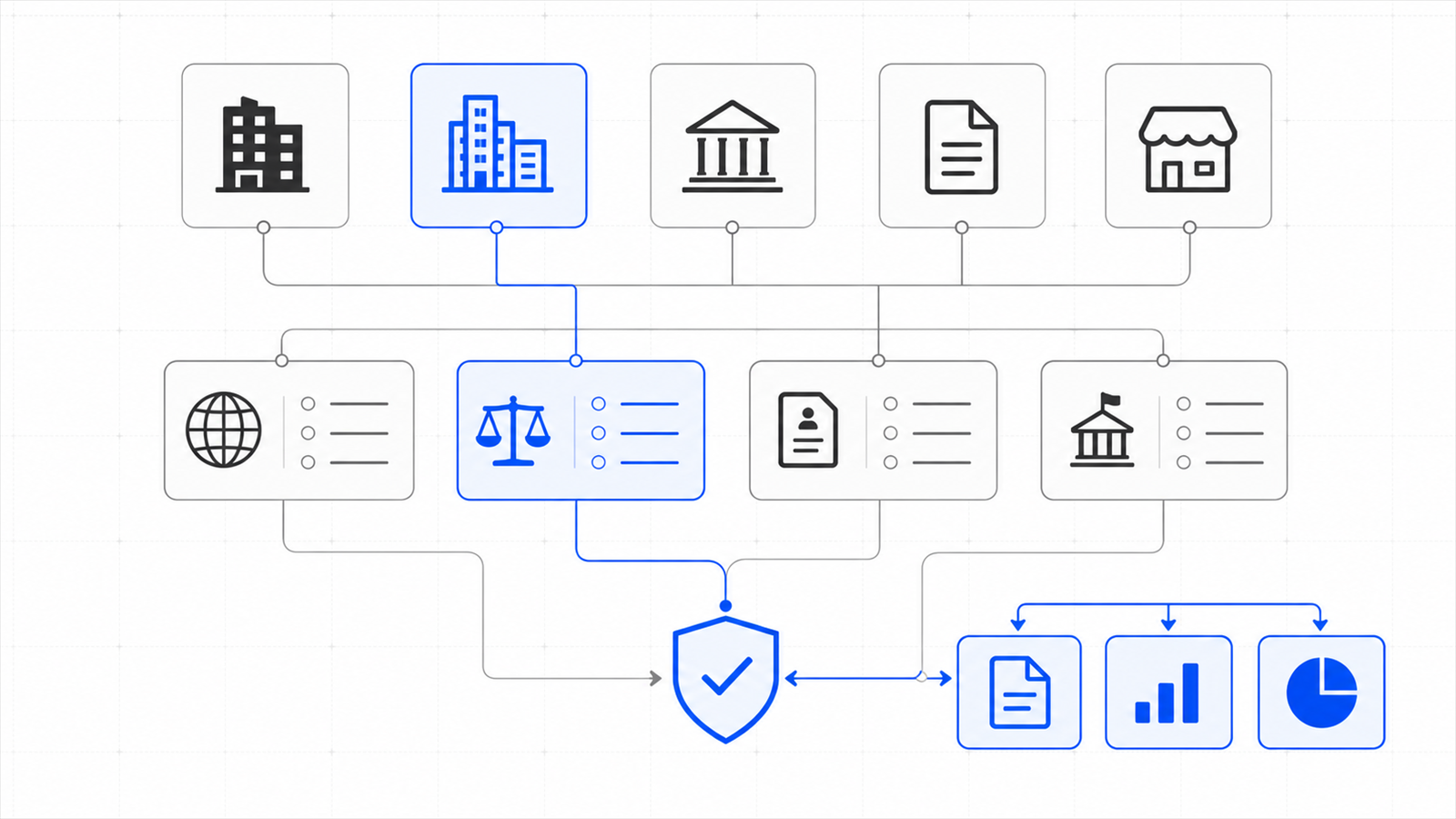
Seven control families run in registry order over each roll file. The first proves the others had something to read; the rest walk the parcel from the register, through its assessment and instalment calendar, across each closing, into the accrual, and out to what was actually paid.
A homebuilder's property tax exposure does not go wrong in the arithmetic on one bill; it goes wrong because the unit of taxation and the unit of ownership come apart, continuously, in a direction nobody is watching. A project starts as one parent parcel, is platted into dozens of lots, and the lots close to buyers one at a time over many months -- and each closing moves exactly one parcel off the developer's books while the county tax roll keeps billing the account it always has. The invoice is genuine, the payee is genuinely the county, the amount genuinely matches the notice; the only thing wrong is whose parcel it is, and that fact lives in a closing file the person approving the payment has never seen. Nothing in the payables cycle catches it. The second failure is the calendar: a developer across state lines answers to regimes that share no due dates, no instalment count and no penalty arithmetic, so applying one jurisdiction's habits to another's parcel is how a delinquency is found after the penalty has already attached. None of these are judgment calls. They are equalities -- a charge against a levy rate, a proration against the days actually held, a due date against a regime, a payment against the period it covers -- which is what a deterministic control settles better than a person approving one genuine-looking bill at a time.
The seeded demo runs every control over every roll file7. The CLI regenerates twenty-eight fictional roll files -- one clean baseline and twenty-seven each carrying a planted defect -- then runs all twenty-six controls over each. The clean file returns PASS with no flags; every defect file returns REVIEW or FAIL and names the control it tripped along with the reason that control exists.
One closing date, two regimes, two different seller's shares8. A test closes two parcels on the same day in two jurisdictions whose fiscal years open six months apart, and asserts the seller's shares come out in different proportions of the year held -- the cheapest proof that nothing about the calendar is hard-coded, since a single date cannot produce two answers unless the regime, not the code, decides the fiscal year.
The roll kept billing a parcel that had already closed9. A test marks a post-escrow instalment paid on a parcel that closed months earlier; own_no_payment_after_escrow fires because the instalment's due period began after close of escrow, even though the payment is otherwise genuine -- the exact break a payables approver cannot see and a check spanning the closing file catches.
| Command | Operation | Output | Exit | Artifacts |
|---|---|---|---|---|
python run.py | regenerate the seeded fictional corpus, run all twenty-six controls over every roll file, write both reports | per-file verdicts and every actionable finding, then the overall verdict | non-zero for the bundled corpus, which carries a planted defect for every control by design | proptax_report.md, proptax_report.json, samples/ |
python -m proptax_engine samples | analyze an existing folder of roll files without regenerating it | per-file verdicts and findings | 0 PASS / 1 REVIEW / 2 FAIL / 3 usage | none unless --json or --md is passed |
python -m proptax_engine samples --generate --quiet | regenerate the corpus and print only the overall verdict | a single verdict line | 0 PASS / 1 REVIEW / 2 FAIL / 3 usage | samples/ |
python -m pytest | run the full test suite for this engine | 10389 passed | 0 when every test passes | none |
| Measure | Result |
|---|---|
| Engine tests10 | 10,389 tests collected live collection from the engine's test directory |
| Registered controls11 | 26 controls counted from the registry, not from documentation |
| Planted defects12 | 27 defect files every registered control has at least one file that trips it |
| Control coverage13 | 100 percent of controls with a planted defect no control ships without a file demonstrating it firing |
The engine has no write path and therefore no autonomy to gate. It produces findings; a person decides whether a bill is paid.
Deterministic envelope. seeded fictional inputs, read-only operation, offline default mode.
Demo gate. FAIL on the bundled corpus, by design -- it carries a planted defect for every registered control
| Severity | Verdict | Action |
|---|---|---|
| No findings above PASS | PASS | carry the mechanically clean roll into the documented property tax review |
| One or more FLAG, no FAIL | REVIEW | a human resolves each flag; an assessment worth protesting, a missing receipt, an exemption without authority and a capitalisation that disagrees with the project's stage all land here |
| One or more FAIL | FAIL | the roll does not clear until the failing control is resolved -- a payment for a post-escrow period, a proration that does not sum, a due date that is not the jurisdiction's |
Distribution: public repository, MIT license.
One conversation: you describe the work that consumes your team's month; we tell you plainly what this engine can take over, what it can't, and what a scoped first phase would cost. Your people keep approval authority.
Book a free consultation