10,3381
Tests
the collected checks that pin this engine's behavior
ENGINE 41
SFS-E41-DTS · DEBT SIZING · REV 2026-07-24 · PRODUCTION
PRODUCTION = runnable end-to-end, CI-backed, full test suite passing. All data fictional and seeded.
Is the loan sized within the advance rate, and does every other term re-derive?
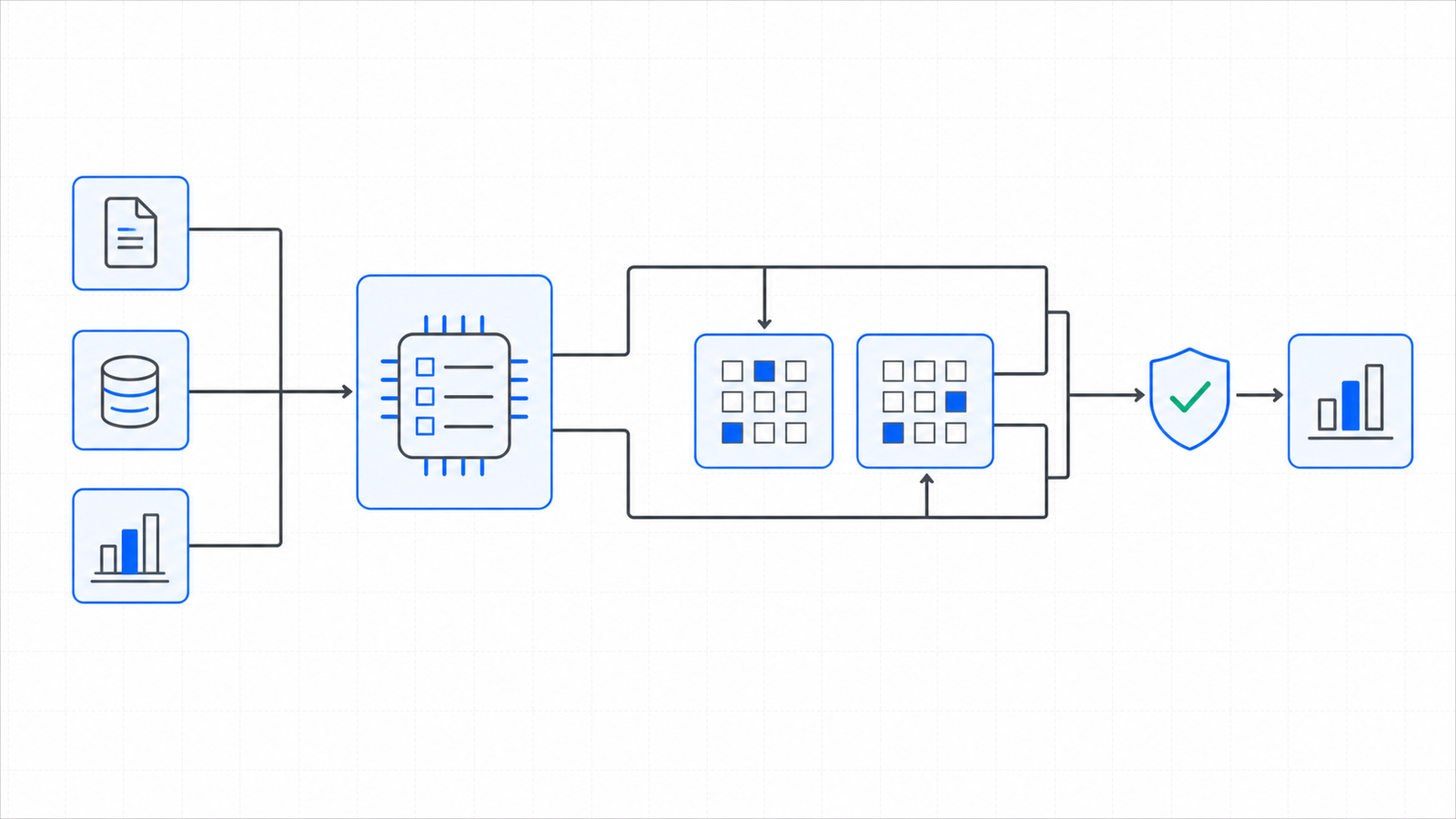
A borrower runs several projects through legal at once, and each period a new dated workbook lays the deals out side by side -- max loan amount, max loan-to-cost, the index-plus-spread rate build-up over a floor, the letter-of-credit and overdraft facilities, the origination / commitment / unused / admin fees, the term and its extension options, the recourse. A term sheet is a one-page summary re-keyed from a longer credit memo, and it drifts in ways nobody re-foots. This engine reads the seven artifacts that workbook emits -- the deal register, the rate build-up, the fee schedule, the rate summary, the fee summary, the expiry watchlist and the portfolio rollup -- and runs twenty-one deterministic controls over them. Is the sizing file complete and the pricing date readable, are the deal ids unique and the loan type, index and recourse each on their allowed list with a cost basis and advance rate declared, is the max loan within max loan-to-cost times the cost basis, is the drawn balance within the commitment, does the stated maturity reconcile to base term plus every extension option, does each deal carry exactly one rate build-up and does its all-in rate recompute as the greater of index-plus-spread and the floor, is every fee line well-typed and struck on a known base against a deal in the register with an amount that recomputes from that base and rate, is every term sheet still live at the pricing date and which are due to expire inside the lead-time window, and do the rollup's deal count, total commitment and total fees foot the deals while the expiry watchlist ties the term sheets actually due. It compares every figure with exact ==, caps the loan with exact <=, measures every expiry against the pricing date the file carries rather than the system clock, and never writes to a source artifact.
A term sheet is the tidiest page in the credit file: four deals side by side, a rate build-up under each, a fee schedule beneath that, and a rollup at the foot. That is exactly why it drifts. None of the ways it goes wrong look wrong in a tidy grid. The stated max loan creeps a cent or a million above max loan-to-cost times the cost basis, and the over-advance rides in the workbook while the cap sits in a cell nobody recomputed. A build-up figure is re-keyed rather than re-derived -- the all-in rate typed as index plus spread when the floor actually governs, or a fee struck on the commitment where it should have been struck on the undrawn balance -- so the number is arithmetically wrong against a rate that is entirely right. And the rollup is maintained beside the side-by-side rather than footed from it, so the total commitment, the total fees and the count of active deals drift the first time a deal moves and nobody re-adds the column. This engine rebuilds each of those figures from the base terms through the same kernel that produced them, compares with exact == and caps with exact <=, ships a planted-defect file for every registered control, and states its benchmark as a command rather than a claim. It is the sizing tie-out, run before anything closes: whether a draw is actually advanced against a budget line is a funding question a separate engine owns, and that engine explicitly declines to re-foot a term sheet.
Seven control families run in registry order over each sizing file. The first proves the others had something to read and that the pricing date is legible, because a control that passes on absent evidence reports assurance it never performed.
A borrower runs several projects through legal at once, and each period a new dated workbook is produced from one template as the deals move toward close. It lays the deals out side by side -- max loan amount, max loan-to-cost, the index-plus-spread rate build-up over a floor, the letter-of-credit and overdraft facilities, the origination / commitment / unused / admin fees, the term and its extension options, the recourse -- and the question is narrow and entirely arithmetic: do the numbers on the term sheet reconcile to the terms the term sheet states? A term sheet is a one-page summary re-keyed from a longer credit memo, and three failures hide inside it, none of which look wrong in a tidy grid. The loan is sized over the advance rate: the stated max loan creeps a cent or a million above max loan-to-cost times the cost basis, and the over-advance rides in the workbook while the cap sits in a cell nobody recomputed. A build-up figure is re-keyed rather than re-derived: the all-in rate typed as index plus spread when the floor actually governs, or a fee struck on the commitment where it should have been struck on the undrawn balance, so the amount is wrong against a rate that is right. And the rollup drifts from the deals: the total commitment, the total fees or the count of active deals is maintained beside the side-by-side rather than footed from it, and it drifts the first time a deal moves and nobody re-adds the column. None of these are judgment calls. They are equalities and comparisons -- a loan against a recomputed cap with exact <=, an all-in rate against max(index + spread, floor), a fee against the truncating basis-point product of its rate and its correct base, a stated total against its re-derivation -- which a deterministic control settles better than a template inherited by whoever maintains the workbook this period.
The seeded demo runs every control over every sizing file7. The CLI generates twenty-three fictional sizing files -- one clean baseline and one carrying each of the twenty-two planted defects -- then runs all twenty-one controls over each. The clean file returns PASS with no flags; every defect file returns REVIEW or FAIL and names the control it tripped along with the reason that control exists.
The advance-rate cap is met at the cent8. Deal DL-203 is seeded sized exactly at its advance-rate cap, so the cap is proved to be met rather than merely cleared. One defect file re-sizes DL-204 to one cent above max loan-to-cost times its cost basis and re-derives the rollup, so the only control that sees it is size_ltc_not_exceeded -- the over-advance is one cent, the finding is unambiguous, and nothing else in the file moves.
The floor is exercised, not assumed9. Deal DL-202's build-up lands below its floor -- index plus spread is 600 basis points against a 700 basis-point floor -- so the max in the all-in rate genuinely governs on the clean baseline. A defect file then contradicts DL-201's stated all-in rate without touching its build-up, and rate_all_in_recomputes rebuilds the rate from index, spread and floor and fails, proving the rate is recomputed rather than read back.
| Command | Operation | Output | Exit | Artifacts |
|---|---|---|---|---|
python run.py | regenerate the seeded fictional corpus, run all twenty-one controls, write both reports | per-file verdicts and every actionable finding, then the overall verdict | 2 for the bundled corpus, which carries a planted defect for every control by design | sizing_report.json, sizing_report.md, samples/ |
python -m sizing_engine samples | analyze an existing folder of sizing files without regenerating it | per-file verdicts and findings | 0 PASS / 1 REVIEW / 2 FAIL / 3 usage | none unless --json or --md is passed |
python -m sizing_engine samples --generate --quiet | regenerate the corpus and print only the overall verdict | a single verdict line | 0 PASS / 1 REVIEW / 2 FAIL / 3 usage | samples/ |
python -m pytest sizing_engine/tests -q | run the full test suite for this engine | 10338 passed | 0 when every test passes | none |
| Measure | Result |
|---|---|
| Engine tests10 | 10,338 tests collected live collection from the engine directory |
| Registered controls11 | 21 controls counted from the registry, not from documentation |
| Planted defects12 | 22 defect files every registered control has at least one file that trips it |
| Control coverage13 | 100 percent of controls with a planted defect no control ships without a file demonstrating it firing |
The engine has no write path and therefore no autonomy to gate. It produces findings; a person decides whether a deal is re-sized, whether a rate or fee is corrected, and whether a term sheet is chased before it lapses.
Deterministic envelope. seeded fictional inputs, read-only operation, offline default mode.
Demo gate. FAIL on the bundled corpus, by design -- it carries a planted defect for every registered control
| Severity | Verdict | Action |
|---|---|---|
| No findings above PASS | PASS | carry the mechanically clean sizing file into the documented credit and legal review |
| One or more FLAG, no FAIL | REVIEW | a human resolves each flag; a term sheet expiring inside the lead-time window and an expiry watchlist that does not tie the deals both land here |
| One or more FAIL | FAIL | the deal or figure is not carried forward until the failing control is cleared -- an over-advance, a draw past its commitment, a maturity that does not reconcile, a rate or fee that does not recompute, a term off its allowed list, a lapsed term sheet, or a rollup total that does not foot |
Distribution: public repository, MIT license.
One conversation: you describe the work that consumes your team's month; we tell you plainly what this engine can take over, what it can't, and what a scoped first phase would cost. Your people keep approval authority.
Book a free consultation