10,4101
Tests
the collected checks that pin this engine's behavior
ENGINE 31
SFS-E31-NRW · CROSS-BORDER WITHHOLDING · REV 2026-07-24 · PRODUCTION
PRODUCTION = runnable end-to-end, CI-backed, full test suite passing. All data fictional and seeded.
Does each cross-border rate recompute from the evidence, and does the 1042 tie to the slips?
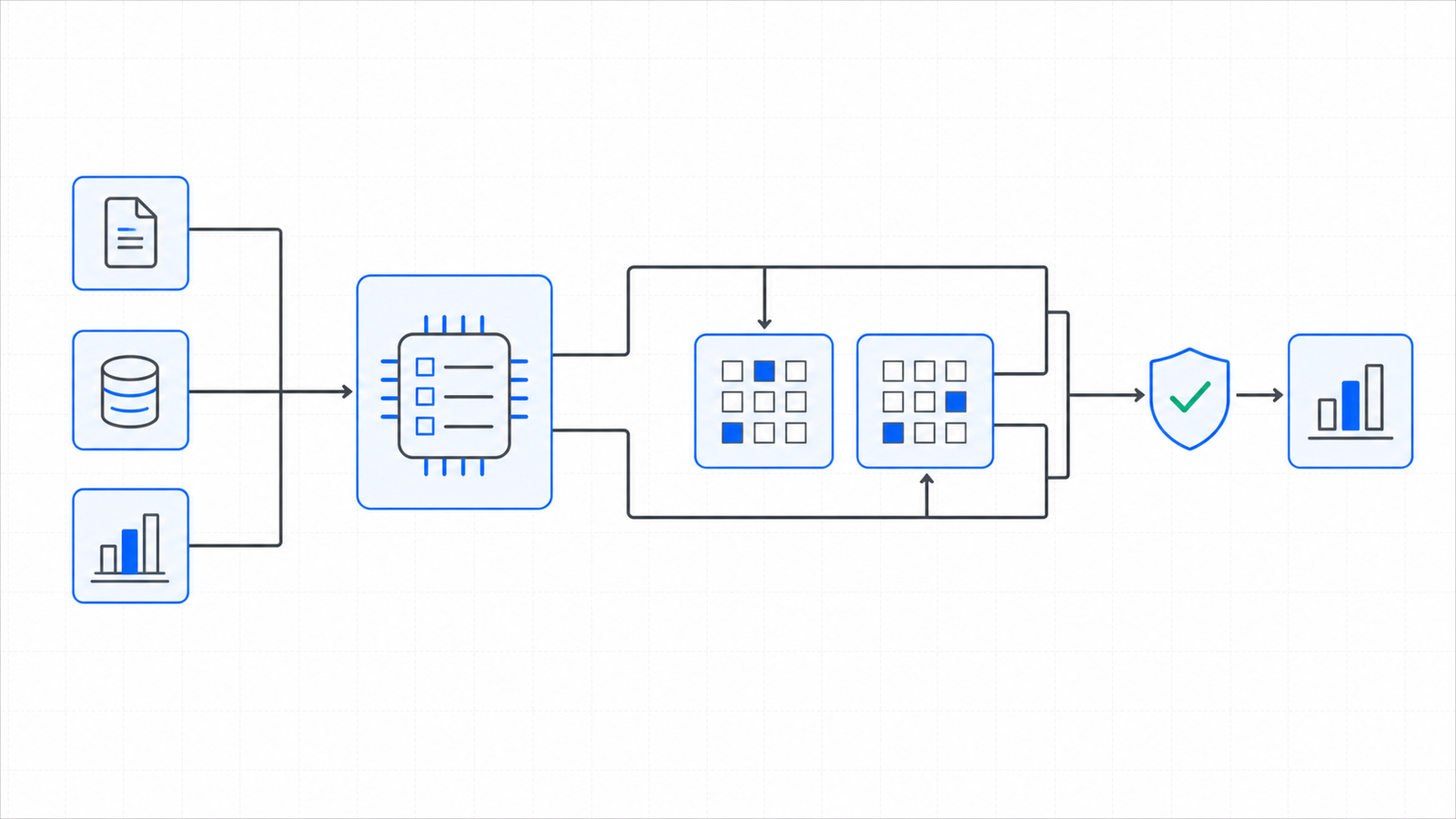
A US withholding agent that pays cross-border interest, dividends, royalties and rent to foreign recipients has to withhold Chapter 3 tax at the right rate, support every reduced rate with a valid Form W-8, deposit what it withheld, and reconcile the annual Form 1042 to the 1042-S slips it transmits -- and every one of those is a determination, not a number that can be typed and trusted. The rate applied to a payment is decided in a fixed order of precedence: the FATCA (Chapter 4) override on a non-participating FFI first, then the portfolio-interest exemption on non-contingent interest, then a treaty rate behind an unexpired W-8, then the statutory default. The tax withheld is that rate applied to the gross, the slips aggregate the reportable payments, the Form 1042 totals sum the slips, and the deposits tie the liability. This engine reads the eight artifacts a withholding record carries -- the payee register, the treaty rate table, the income-code table, the payment register, the deposit register, the 1042-S slip register, the W-8 renewal watchlist and the Form 1042 panel -- and runs twenty-eight deterministic controls over them. Is the file complete and the review date readable, are the payee ids unique and every foreign country in the rate table with a classified Chapter 3, Chapter 4 and LOB code, does the treaty table define and bound every rate a payment needs, is every payment well-formed and attributable to a payee, is the US payee excluded and the accrued coupon un-withheld, does every applied rate recompute from the payee's status through the shared kernel and every tax equal rate times gross, is each treaty reduction supported by an unexpired W-8 with the portfolio and FATCA boundaries held, do the deposits tie the tax withheld and was the return filed on time, and do the 1042 gross, tax and 1042-T count tie the slips with one slip per reportable payee. It compares every rate, tax and total with exact ==, treats the W-8 expiry gate as <= so a form lapsing on the review date is already unsupported, and never writes to a source artifact.
A withholding determination is a snapshot of a payee's status on the day a payment went out, and it goes stale -- or was wrong to begin with -- in ways nobody watches. A treaty rate is applied while the W-8 that would support it is missing or expired past its three-year term; the paper shows a low rate and the support for it is not there. A US payee is withheld on when it should not be, an accrued coupon is treated as paid, a non-participating FFI is handed treaty relief the FATCA override bars it from, a contingent coupon is coded as exempt portfolio interest -- each one internally consistent, none of them wrong on their face. The deposits drift a cent from the liability, or the return is filed a week late. The Form 1042 total gross or total tax is stated on a number nobody rebuilt from the slips underneath it, and a reportable payee has no slip at all. The order of precedence is the whole of the rule and it does not commute: a payee who is both a treaty claimant and a non-participating FFI is withheld at the statutory rate, not the treaty rate, and only one traversal order gets that right. This engine rebuilds every rate through the one kernel that produced the data, gates every reduction on a valid W-8, ties the deposits and the 1042 to the slips with exact ==, ships a planted-defect file for every registered control, and states its benchmark as a command rather than a claim. A rate reduced without support, a US payee withheld, a total a cent off the slips -- each is invisible until an examiner recomputes the withholding the agent already reported.
Eight control families run in registry order over each withholding file. The first proves the others had something to read and that the review date is legible, because a control that passes on absent evidence reports assurance it never performed.
A US withholding agent that pays cross-border interest, dividends, royalties or rent to foreign recipients has to withhold Chapter 3 tax at the right rate, support every reduced rate with a valid Form W-8, deposit what it withheld, and reconcile the annual Form 1042 to the 1042-S slips it transmits. A withholding determination is a snapshot of a payee's status on the day a payment went out, and it goes stale -- or was wrong to begin with -- in ways nobody watches. Four failures hide inside a folder of withholding workpapers, and none of them look wrong. The rate is reduced without support: a treaty rate is applied while the W-8 behind it is missing or expired past its three-year term. The classification is off: a US payee is withheld on, an accrued-but-unpaid coupon is treated as paid, a non-participating FFI is given treaty relief the FATCA override bars it from, or a contingent coupon is coded as exempt portfolio interest. The deposit drifts from the liability, or the return is filed after its due date. And the return does not tie to the slips: the Form 1042 total gross or total tax is stated on a number nobody rebuilt from the 1042-S slips underneath it, or a reportable payee has no slip at all. None of these are judgment calls. They are equalities and comparisons -- an applied rate against the determination the kernel rebuilds with exact ==, a tax against rate times gross, a deposit and a 1042 total against the slips, a W-8 term against the review date with <= -- which a deterministic control settles better than a spreadsheet inherited by whoever tracks the withholding this year.
The seeded demo runs every control over every withholding file7. The CLI generates thirty fictional withholding files -- one clean baseline and one carrying each of the twenty-nine planted defects -- then runs all twenty-eight controls over each. The clean file returns PASS with no flags; every defect file returns REVIEW or FAIL and names the control it tripped along with the reason that control exists.
The order of precedence does not commute8. A payee is seeded as both a treaty claimant and a non-participating FFI. The FATCA override must win: the payment is withheld at the statutory 30%, not the treaty rate. One defect file hands that payee a treaty-reduced 15% and trips exm_fatca_override, while another removes the W-8 behind a genuine treaty reduction and trips exm_w8_present_for_treaty -- proving the two exemption branches catch different failures at the edge boundary the kernel encodes.
The rate is recomputed, not read back9. A defect file under-rates a treaty payee, leaving a stated rate that no longer matches the determination. wh_rate_recomputes rebuilds the rate from the payee's status through the shared kernel -- FATCA, then portfolio, then treaty behind a valid W-8, then statutory -- and fails, proving the rate is recomputed from the evidence rather than trusted as stated.
| Command | Operation | Output | Exit | Artifacts |
|---|---|---|---|---|
python run.py | regenerate the seeded fictional corpus, run all twenty-eight controls, write both reports | per-file verdicts and every actionable finding, then the overall verdict | 2 for the bundled corpus, which carries a planted defect for every control by design | nrw_report.json, nrw_report.md, samples/ |
python -m withholding_engine samples | analyze an existing folder of withholding files without regenerating it | per-file verdicts and findings | 0 PASS / 1 REVIEW / 2 FAIL / 3 usage | none unless --json or --md is passed |
python -m withholding_engine samples --generate --quiet | regenerate the corpus and print only the overall verdict | a single verdict line | 0 PASS / 1 REVIEW / 2 FAIL / 3 usage | samples/ |
python -m pytest withholding_engine/tests -q | run the full test suite for this engine | 10410 passed | 0 when every test passes | none |
| Measure | Result |
|---|---|
| Engine tests10 | 10,410 tests collected live collection from the engine directory |
| Registered controls11 | 28 controls counted from the registry, not from documentation |
| Planted defects12 | 29 defect files every registered control has at least one file that trips it |
| Control coverage13 | 100 percent of controls with a planted defect no control ships without a file demonstrating it firing |
The engine has no write path and therefore no autonomy to gate. It produces findings; a person decides whether a rate is carried into the return and whether a W-8 or deposit is chased.
Deterministic envelope. seeded fictional inputs, read-only operation, offline default mode.
Demo gate. FAIL on the bundled corpus, by design -- it carries a planted defect for every registered control
| Severity | Verdict | Action |
|---|---|---|
| No findings above PASS | PASS | carry the mechanically clean withholding file into the documented sign-off and 1042 review |
| One or more FLAG, no FAIL | REVIEW | a human resolves each flag; a W-8 due for renewal inside the lead-time window and a watchlist that does not tie the payee evidence both land here |
| One or more FAIL | FAIL | the rate or total is not carried into the return until the failing control is cleared -- a reduction with no valid W-8, a US payee withheld, an accrued coupon withheld, a rate that does not recompute, or a deposit or 1042 total that does not tie |
Distribution: public repository, MIT license.
One conversation: you describe the work that consumes your team's month; we tell you plainly what this engine can take over, what it can't, and what a scoped first phase would cost. Your people keep approval authority.
Book a free consultation